 In the exciting new season of international affairs, the rules have finally been simplified. After decades of tedious debate about sovereignty, international law, and postwar norms, global politics has at last been distilled into a principle simple enough to fit on a bumper sticker: If you can take it, it’s yours.
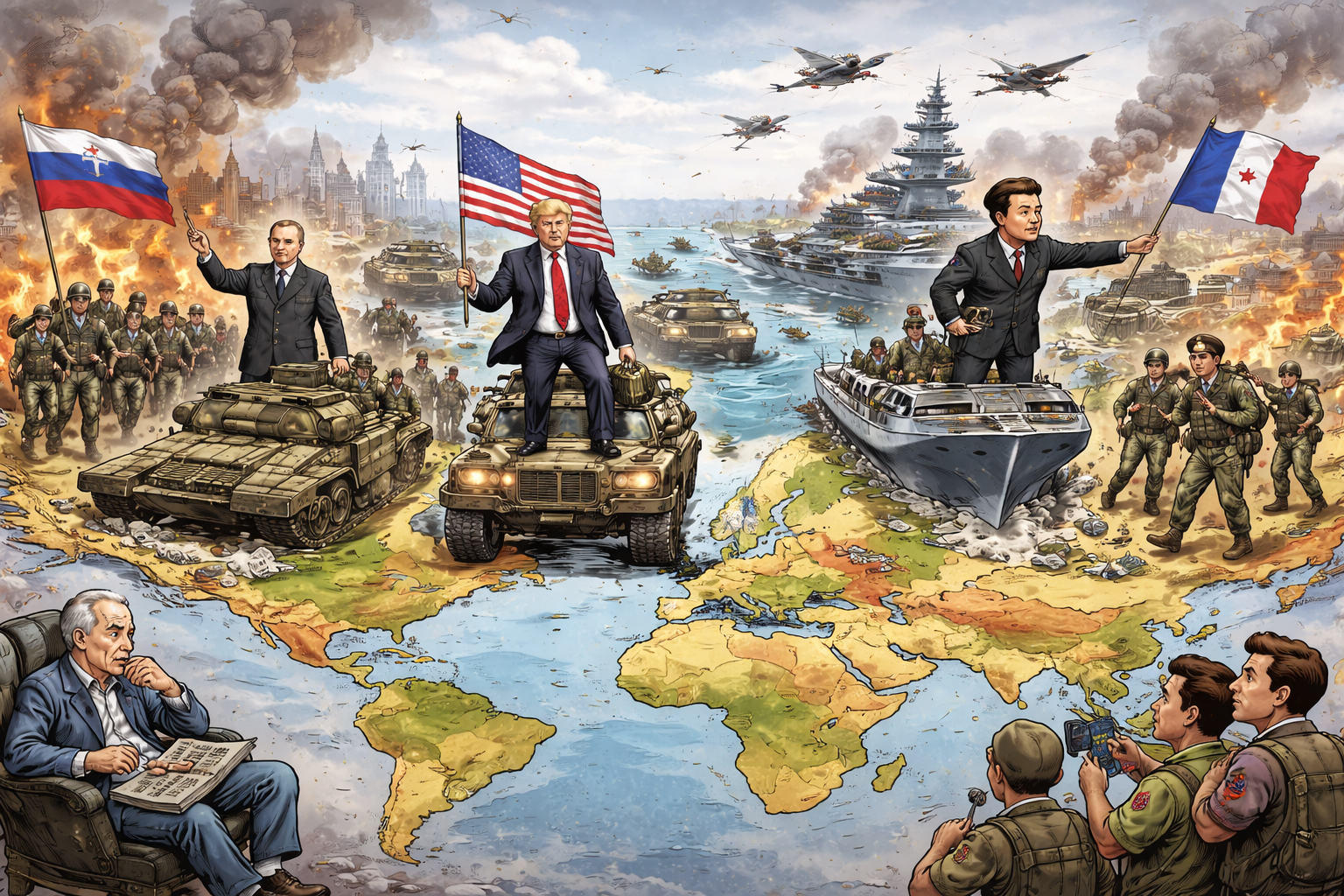
Russia, ever the early adopter, began the trend by walking into Ukraine and announcing that history, geography, and vibes justified the move. This was followed by many long speeches explaining that borders are imaginary, except when they are Russian. The world gasped, issued statements, held emergency meetings, and then largely carried on, demonstrating that outrage is renewable energy but enforcement is not.
Enter the United States. Having watched Russia redraw maps without suffering existential consequences, Washington decides it would be inefficient not to get in on the action. Venezuela, after all, has oil, political dysfunction, and the misfortune of being nearby. The president is captured, democracy is promised later, and the lesson is learned worldwide: invasions are bad unless they are done by countries with good branding.
China, being extremely attentive students of global behavior, takes notes. The lecture is clear. If borders are flexible and norms are optional, then Taiwan becomes less a complicated diplomatic issue and more a scheduling problem. Beijing politely thanks the international community for years of precedent building and begins rehearsing phrases like peaceful reunification while parking a navy nearby the size of a continent.
At this point, confusion spreads among mid level powers. France looks at a map of West Africa and wonders aloud why it ever left. Mali and Burkina Faso are unstable, after all, and history books clearly indicate that if something once belonged to you, it can again, especially if you squint hard enough and say it is for stability. Why let the new imperialists have all the fun.
Suddenly, the world is alive with opportunity. Turkey checks in on old Ottoman territories. Britain briefly considers India before remembering how that went. Spain eyes Florida. Someone in Rome opens a dusty atlas and whispers about Gaul.
International law, meanwhile, sits quietly in the corner, clutching its Geneva Conventions like an unread instruction manual. It was not designed for this era. It assumed shame was a deterrent and treaties meant something. It did not anticipate a world where global leaders watch each other commit violations and say, with professional admiration, “Bold move.”
The United Nations responds with emergency sessions, strongly worded resolutions, and the ceremonial lowering of expectations. The Security Council debates furiously, except for the members doing the invading, who veto everything while explaining that their invasions are unique, special, and fundamentally different from all other invasions, including the ones they criticized last week.
Smaller countries observe this spectacle with growing interest and mild panic. They had been told that borders were sacred and that aligning with the right institutions would keep them safe. Now they are frantically googling “how to acquire nuclear weapons quickly” and “defensive alliances for beginners.”
Think tanks produce papers explaining that this is not the collapse of the international order but merely its evolution. Commentators explain that realism has returned, as if it ever left, and that moral authority is overrated in a world where tanks move faster than press releases.
The public, exhausted, shrugs. The news cycle moves on. Markets adjust. Flags are changed. Maps are updated. Everyone pretends this was inevitable, which is the most comforting lie of all.
And so we arrive at the brave new doctrine of global affairs. Putin takes Ukraine. Trump takes Venezuela. China takes Taiwan. France takes Mali and Burkina Faso. Everyone else takes notes. The rules have not disappeared. They have simply been rewritten in invisible ink, legible only to those with enough power to ignore them.
Welcome to the age of international relations by example. Please keep your hands inside the borders while they last.

Leave a Reply